Home Prices Keep Rising! Real Estate Experts Forecast the 2024 U.S. Housing Market
January 2, 2024 Evelyn Yang recommends
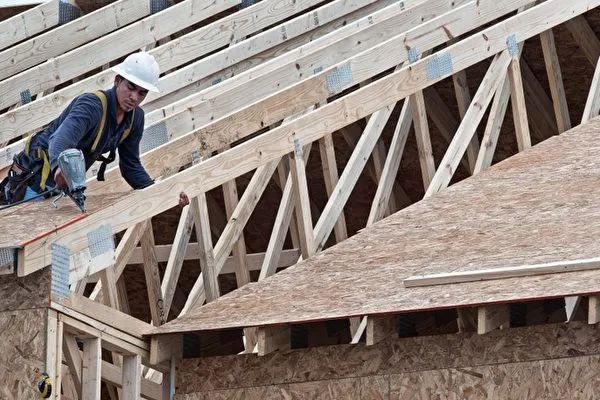
Wall Street’s most important forecast for the direction of the U.S. housing market in 2024 is that, as interest rates decline and builders continue to increase inventory, the pace of home-price growth may slow. The image shows construction workers building a house. (Paul J. Richards/AFP)
Wall Street’s most important forecast for the direction of the U.S. housing market in 2024 is that, as interest rates decline and builders continue to increase inventory, buyers’ and sellers’ wait-and-see attitudes toward the real estate market may change.
In 2023, U.S. home prices continued to rise, while high borrowing costs left homebuyers struggling for an entire year. Meanwhile, the shortage of homes further intensified the obstacles to buying a home.
In summary, after experiencing a sharp decline in 2022, U.S. home prices rose for nine consecutive months beginning in January 2023 and recently reached a record high. At the same time, as the Federal Reserve raised interest rates, mortgage rates climbed to their highest level since the mid-2000s.
However, with more and more people betting that the Federal Reserve will ease monetary policy in 2024, the situation appears likely to change soon.
Below is the 2024 housing-market outlook from leading experts at major real estate organizations.
Realtor.com: A Brief Respite
In early December 2023, Realtor.com forecast that the average 30-year fixed mortgage rate would be around 6.8% in 2024 as the Federal Reserve becomes more dovish.
As the rise in mortgage rates slows, demand may also slow because homebuyers will not feel as much pressure to chase rising rates as they did previously.
The listing platform expects home prices to fall 1.7% in 2024. By comparison, home prices rose an average of 3% in 2023.
Its chief economist, Danielle Hale, said, “After a fairly relentless period of home-price increases, this will be a brief respite.”
She added, “Some of the pressure and urgency will begin to ease.”
The organization forecasts that the inventory of existing homes for sale will decline 14% in 2024, while the mortgage rate for which applications are submitted will still be higher than the rate obtained by 85% of current borrowers.
Goldman Sachs: More Homes Under Construction
Goldman Sachs expects existing-home sales to decline only slightly in 2024 before rebounding to 4.24 million units in 2025. Meanwhile, new-home sales will rise from 680,000 this year to 723,000 in 2024.
By 2024, housing starts will increase slightly, climbing to 1.335 million units. Homebuilders will significantly increase new-home construction in 2024.
Goldman Sachs expects home-price growth to slow in 2024.
Redfin: Home Prices Will Fall 1%
Real estate company Redfin expects the average 30-year mortgage rate to be 6.6% by the end of 2024, causing home prices to decline 1%.
Its chief economist, Daryl Fairweather, said that home prices remain out of reach for many Americans, but even a small decline would be welcome.
At the same time, home sales will rise 5% to 4.3 million units. Fairweather said high costs will increase demand for rentals, and the number of Americans moving in with their parents may rise.
Zillow: Home Prices Will Level Off
In a report released in late November, real estate platform Zillow forecast that buyers should not expect home prices to plunge in 2024. However, the pace of growth will level off, allowing Americans’ incomes to catch up.
Mortgage rates may remain at their current levels over the next several months because continued easing inflation makes a rate increase less likely.
Zillow researchers said, “Overall, the cost of buying a home will level off in 2024, and if mortgage rates decline, the cost of buying a home may also decline.”
Fannie Mae: The Pace of Home-Price Growth Will Slow
Fannie Mae is a government-sponsored mortgage finance institution. Its forecast is that the average mortgage rate will be 6.7% in 2024, not much different from its level in the summer of 2023.
In 2024, total home sales will jump to 4.8 million units, driven by a gradual recovery in existing-home sales. A moderate recession will lead to a slight decline in new-home sales, but over the long term, the contraction will not reduce construction volume.
Fannie Mae expects home prices to continue rising, although at a slower pace. In its October survey, it forecast that home prices would rise 2.4% in 2024.
【Disclaimer】Some of the content and images are sourced from U.S. news outlets and the internet. This article is for sharing purposes only and does not represent any particular viewpoint. If it infringes upon your rights, please contact us first, and we will address it promptly.